The Rise of Thematic ETFs: Smart Trend-Investing or Expensive Hype?
Nearly 400 funds. $256 billion in assets. One fund that doubled in 40 trading days. Thematic ETFs are having their biggest year ever, but the category’s own history shows how fast that can reverse.
Every investing cycle produces a story that’s easy to believe in: the internet in the late ’90s, clean tech after 2008, crypto in 2021. In 2026, it’s artificial intelligence, defense modernization, and the energy buildout underneath both.
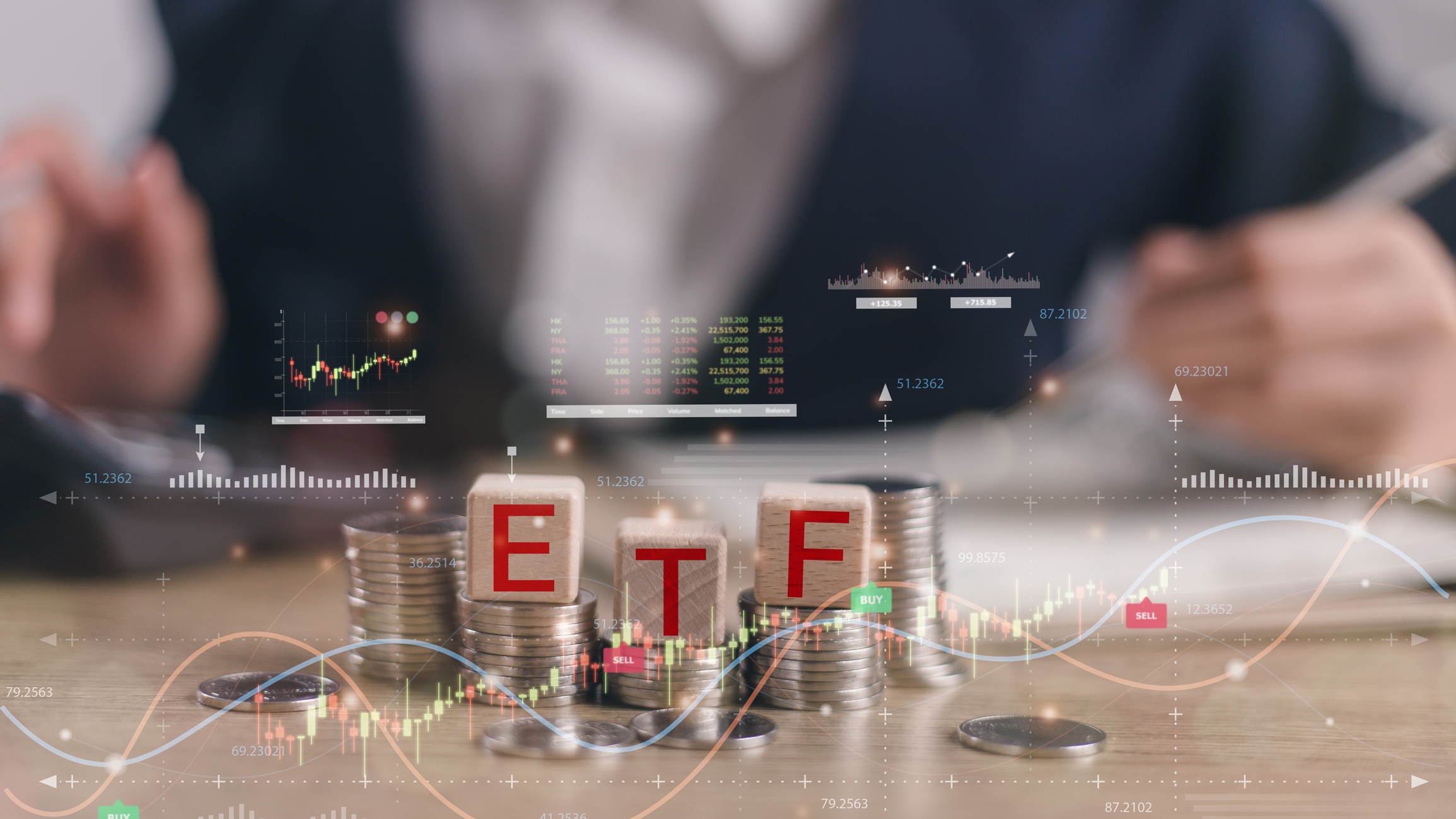
What’s different this time is how easy it’s become to actually invest in the story itself, rather than betting on which individual company wins it. That’s the entire premise of a thematic ETF, and it’s why the category has exploded into one of the fastest-growing corners of the ETF market, even as its own track record shows exactly how that bet can go wrong.
By the numbers
- 393 funds / $256B+ in US thematic ETF assets in 2026 (ETF.com)
- 11x growth in US thematic fund assets over the past decade (BlackRock)
- $68B in thematic ETF inflows in 2025 — the strongest year since 2021 (BlackRock)
- $5–8 trillion projected AI infrastructure spending by 2030 (BlackRock)
What is a thematic ETF?
An ETF is a basket of investments, buy one share, get exposure to a portfolio of companies, traded on an exchange all day like a stock.
A thematic ETF narrows that basket around a single forward-looking trend rather than a sector, market-cap tier, or geography. Instead of tracking established GICS industry classifications the way a sector fund does, a thematic ETF is built to capture a structural shift, artificial intelligence, defense modernization, clean energy, robotics, genomics, that cuts across multiple traditional sectors at once.
The category has grown fast. Thematic ETFs now number 393 US-listed funds managing more than $256 billion in assets, up from $193 billion as recently as March 2026. Over the past decade, US thematic fund assets have grown elevenfold, and 2025 alone saw more than $68 billion in thematic ETF inflows, the strongest year for the category since 2021.
Why AI, defense, and energy became the dominant themes
AI. BlackRock’s 2026 Thematic Outlook frames artificial intelligence as entering “its next growth phase,” moving past basic applications into far more compute-intensive tasks ,and that demand is now flowing into data centers, energy, and digital infrastructure, not just the handful of companies building AI models.
BlackRock estimates data-center construction alone absorbed more than $500 billion in 2025, and projects total AI infrastructure spending could reach $5–8 trillion by 2030. Notably, BlackRock’s own January 2026 investor survey found sentiment shifting within the AI trade itself: only a fifth of surveyed clients said mega-cap tech represented the best AI opportunity, while more than half favored the energy and power providers that keep data centers running. That’s a meaningful nuance for a “just buy AI” narrative, even AI bulls are rotating toward the infrastructure layer.
Defense. Rising geopolitical tension and higher defense budgets are pushing the theme beyond traditional prime contractors into space, automation, cyber, and autonomous systems, a broader opportunity set than any single defense stock.
Clean energy and infrastructure. BlackRock projects global infrastructure investment will surpass $100 trillion by 2040 across energy, transportation, digital networks, and defense combined, with power availability now a genuine bottleneck, since new transmission lines can take nearly a decade to build while data centers go up in under two.
Why investors reach for the theme instead of the stock
The pitch is straightforward: an investor who believes AI will reshape the economy doesn’t have to guess whether the winning bet is a chipmaker, a networking company, or a data-center REIT. One fund, diversified exposure to the whole ecosystem. It’s also simply more intuitive than buying an abstract broad-market index — investors can point to something they see happening in the world and connect it directly to a position in their portfolio.
That same convenience is the category’s core risk.
The four risks that matter
Concentration. A thematic ETF holds multiple companies, but they’re often exposed to the same industry drivers, so when the theme turns, holdings tend to fall together rather than offsetting each other. 2026 offered a live example of concentration cutting the other way, too: the Roundhill Memory ETF (DRAM), built around AI memory chips, doubled in just 40 trading days as one theme became the market’s hottest trade, a level of return that’s as much a warning sign about crowding as a success story.
Valuation. Being right about a trend and overpaying for it are two different outcomes. A company connected to a hot theme isn’t automatically a good investment at any price.
Timing. Themes can take years to play out. Clean energy may have a genuine multi-decade case, but that doesn’t mean every clean-energy holding performs well in any given twelve months, and the same applies to AI-adjacent stocks that lag even while the broader theme expands.
Theme fatigue. Capital chasing a trend today can move on tomorrow. In July 2026, Themes ETF Trust liquidated 13 funds, including its US Infrastructure and US R&D Champions ETFs, for failing to attract enough assets, a reminder that launching into a hot theme is no guarantee of staying power. The SEC’s own investor guidance urges looking closely at what an ETF actually holds, its costs, and its risks, rather than assuming all funds tracking a popular theme are alike.
Real example: theme fatigue
In July 2026, Themes ETF Trust liquidated 13 funds, including its US Infrastructure and US R&D Champions ETFs, after they failed to attract enough investor assets. Launching into a hot theme is no guarantee the fund survives it.
The question that actually matters
Skip “is AI the future” or “will defense spending rise”, those questions mostly answer themselves. The harder, more useful question is: how much of that expected future growth is already priced in?
That means looking past the theme label to what the fund actually owns, how concentrated its top holdings are, what it costs relative to peers, and whether the underlying trend is structural or a momentum trade dressed up as one.
✔ Reader takeaway
Don’t stop at “is AI the future?”, ask how much of that future is already in the price. Check the fund’s actual holdings, concentration, and cost before buying the theme.
Bottom line
Thematic ETFs make it easier to invest in a trend without picking a single winning stock. That convenience is exactly why the category has grown elevenfold in a decade — and exactly why it’s prone to boom-and-bust cycles inside individual themes. The real skill isn’t spotting the next big trend; every investor can do that. It’s figuring out how much you’re paying to believe in it, and whether that price still makes sense once the initial excitement fades.
editor’s picks

